Synthiboard
Open Source Hardware
Coloring Zine
by MakerVan Labs

Open Source Hardware
Coloring Zine
There are some great open source hardware projects out there, but sometimes, it's just too hard to build them yourself. But you know what's much easier? Coloring them in.
For this zine, I've collected some open source hardware projects that were influential to me, or seemed like they were important for the movement of open source hardware. Some might be new to you, some you will surely already know about. One or two feel controversial now, but there's still a story to be learned from them.
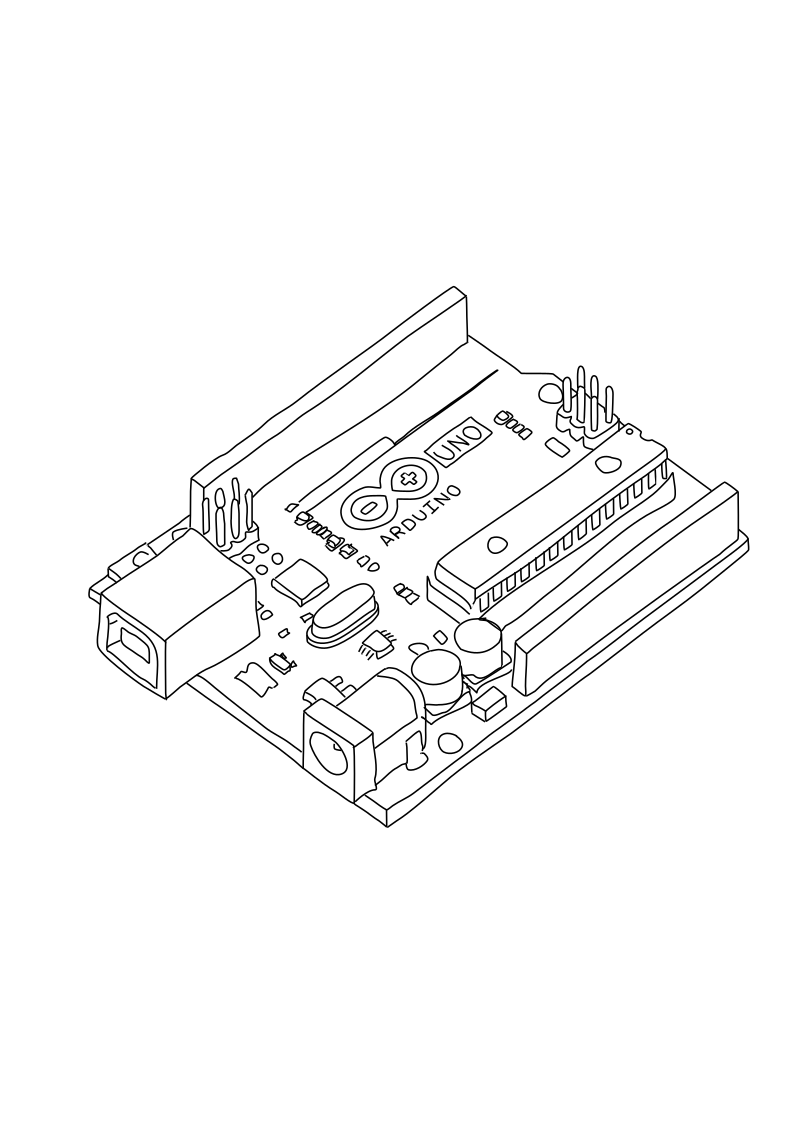
Arduino Uno
The Arduino Uno is probably the most well known Arduino board. It's a microcontroller dev board based on the ATmega328P. Its form factor and pinout are the basis for Arduino shields, one of many parts of the Arduino system that lowered the barrier to entry into DIY electronics and hardware building for so many of us.
| License |
CC BY-SA |
| Creator |
Arduino SA |
| Website |
https://docs.arduino.cc/hardware/uno-rev3/ |
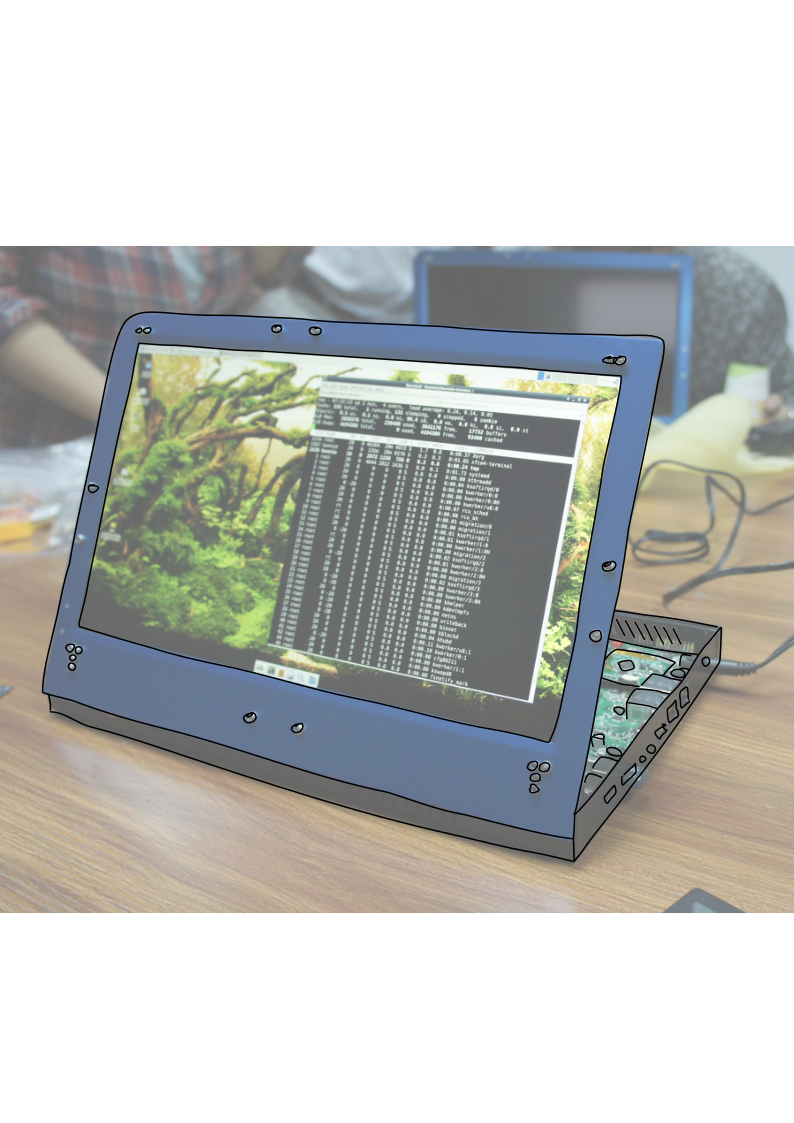
Novena
The Novena was the first open-hardware laptop I ever came across. In addition to a regular quad-core ARM CPU, it also included a closely coupled FPGA, making it not just an amazing OSHW project but also a powerful hardware hacking platfrom. Its design might be a bit unconventional, with the screen oriented opposite of a regular laptop and the keyboard designed to be taken out of the case for regular use, but its modularity also made it easy to expand and modify, furthering its potential as a platform to do more hardware hacking and experimentation.
| License |
CC-BY-SA |
| Creator |
bunnie and xobs |
| Website |
https://www.kosagi.com/ |
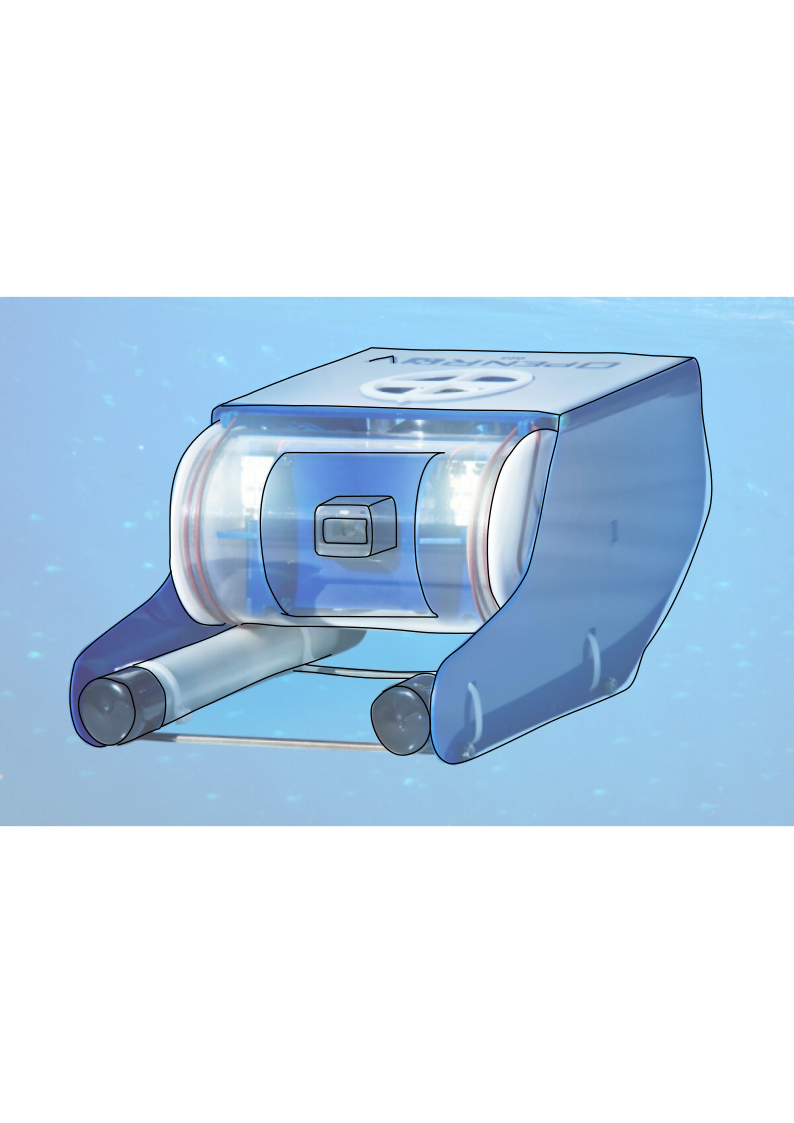
OpenROV
When it was founded, OpenROV seemd to be all over Make Magazine and similar blogs or publications. It's a robot submarine designed to make underwater exploration accessible to everyone.
Following a successful Kickstarter campaign for the OpenROV Kit, they later released a more advanced version of their underwater drone, the Trident. They market them as open-source, but in reality, some parts are licensed with Non-Commercial licenses.
| License |
various |
| Creator |
David Lang, Eric Stackpole |
| Website |
https://github.com/OpenROV |
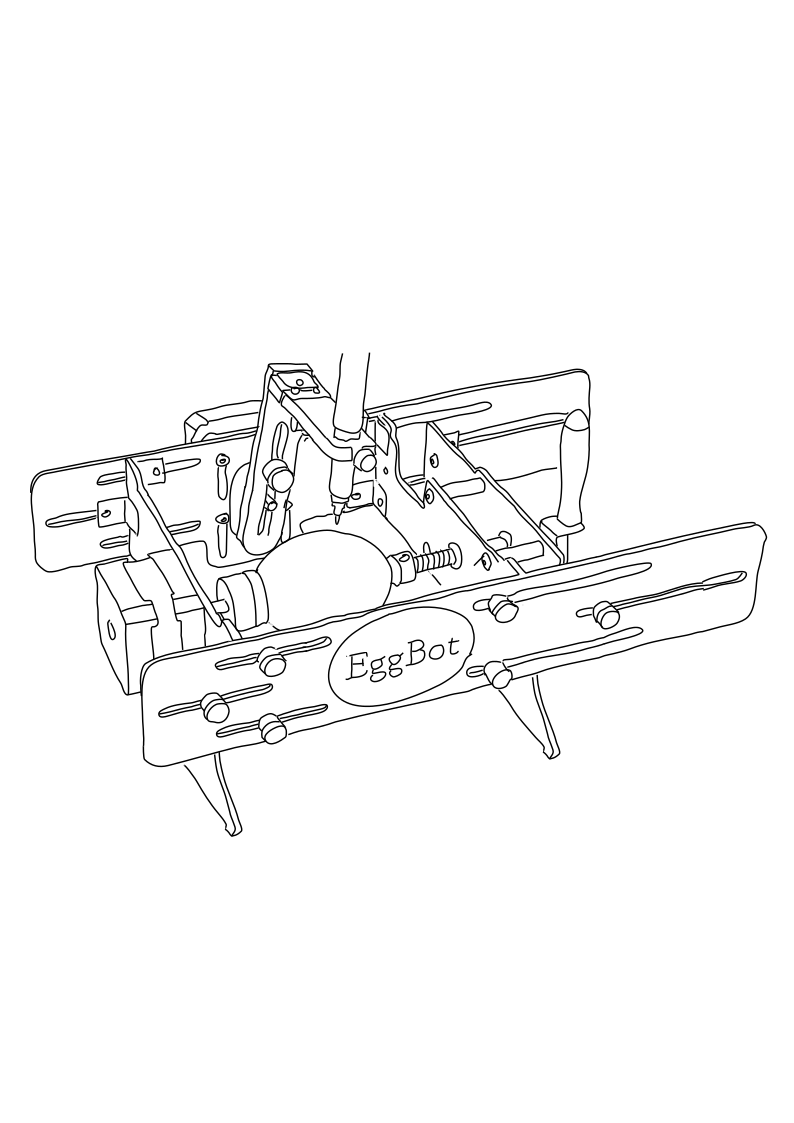
EggBot
The EggBot is a compact, easy to use open-source art robot that can draw on spherical or egg-shaped objects. Draw up your design in Inkscape, and have the EggBot replicate it on an egg, a ping pong ball, or Christmas ornament.
These days, you can find many derivatives of the EggBot, but having tried to build some of them myself, the mechanics of drawing on an egg are harder than they might seem, and packaging that into an easily usable product is a step many of these derivate projects seemed to struggle with.
| License |
TAPR OHL / CC-BY-SA 3.0, GPL 3.0 |
| Creator |
Evil Mad Scientist Laboratories, Bruce Shapiro |
| Website |
https://egg-bot.com/ |
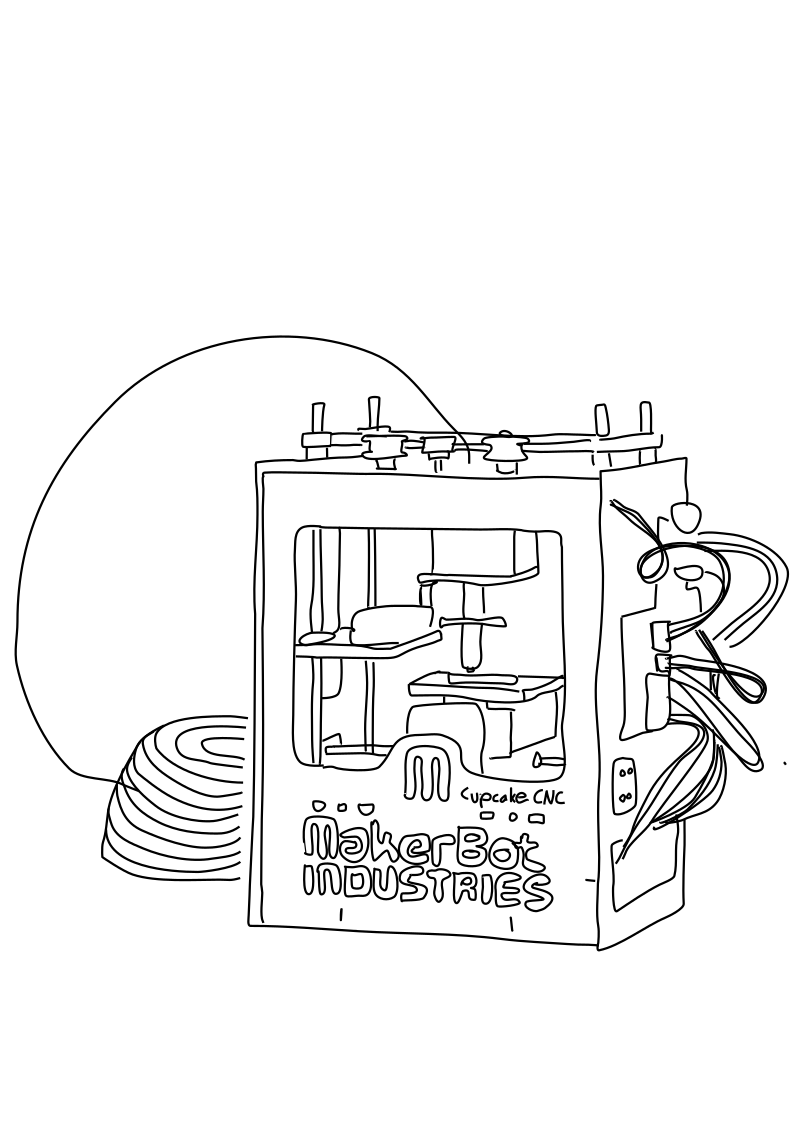
MakerBot CupCake
The MakerBot CupCake was one of the first widely available desktop 3D printers. Building on the RepRap project, the new design utilizing laser-cut plywood construction came to dominate the filament open-source 3D printer market for quite a while. It was slow and had a tiny print bed, but for many it was the first introduction to 3D printing, in their hackspaces, fablabs or even at home.
These days, 3D printers like these are a rare sight, as is the true open-source business model many 3D printing companies like Makerbot started out with.
| License |
GPL 2.0 |
| Creator |
MakerBot Industries |
| Website |
https://www.thingiverse.com/thing:457 |
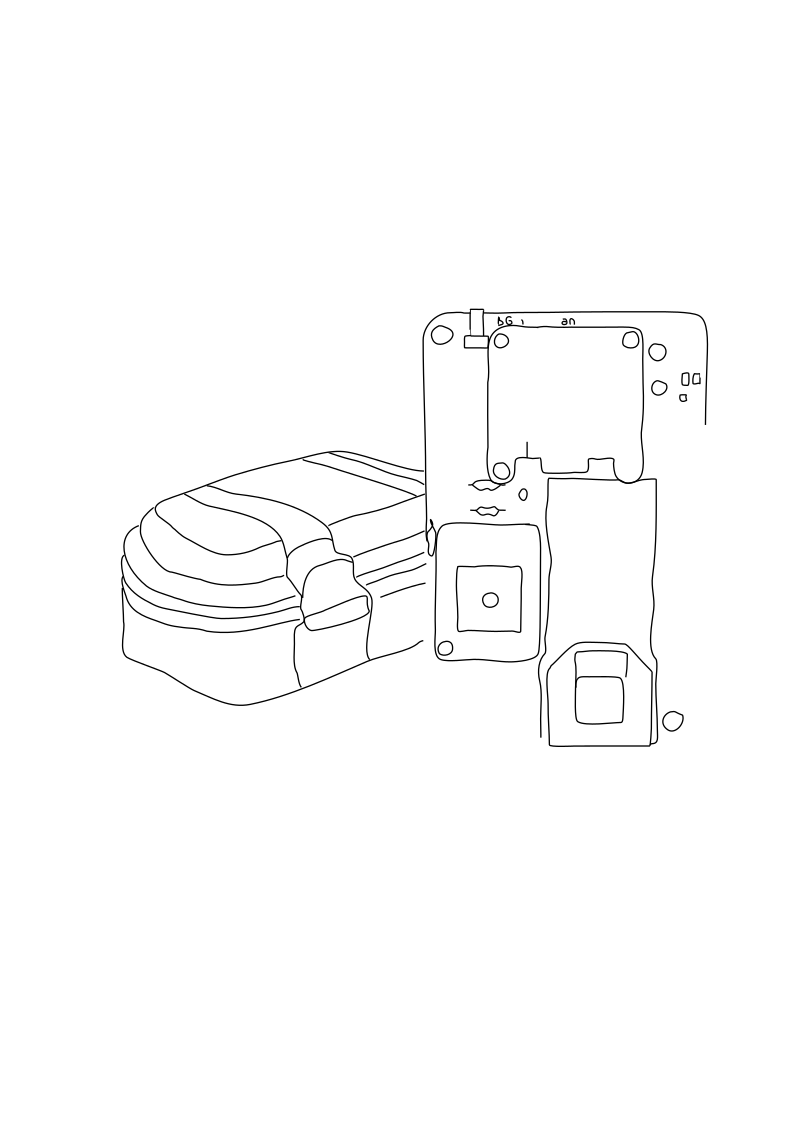
Safecast bGeigie Nano
The Safecast bGeigie Nano is a mobile, GPS enabled, logging radiation sensor. It was developed in response to the Fukushima Daiichi nuclear disaster in 2011, when there was a lack of reliable and accessible radiation data.
Designed for mounting on the outside of a car window, People would drive around with Safecast devices to collect data that could easily be shared with the public.
| License |
CC-BY-SA 3.0 |
| Creator |
SafeCast |
| Website |
https://safecast.org/devices/bgeigie-nano |
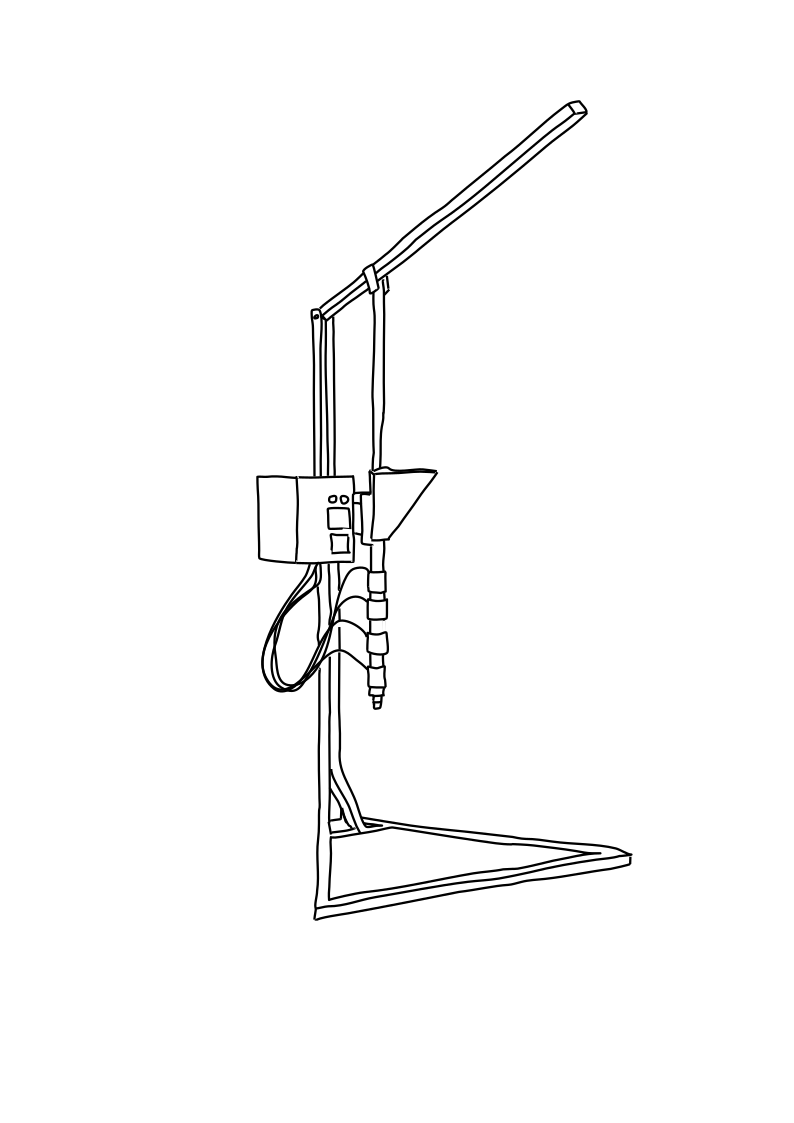
Precious Plastic Injection Machine
Precious Plastic is a global community focused on solving issues around plastic waste. They have developed a number of machines for recycling plastic, including this injection molding machine.
It enables people to melt shredded plastic (maybe shredded with a shredder also designed by Precious Plastic) and push it into molds to create new ojects. Using mostly common materials and easily sourcable parts, it can be build anywhere around the world, empowering community members to take recycling into their own hands, for fun, education & profit.
| License |
CC-BY-SA |
| Creator |
Precious Plastic |
| Website |
https://community.preciousplastic.com/academy/build/injection |
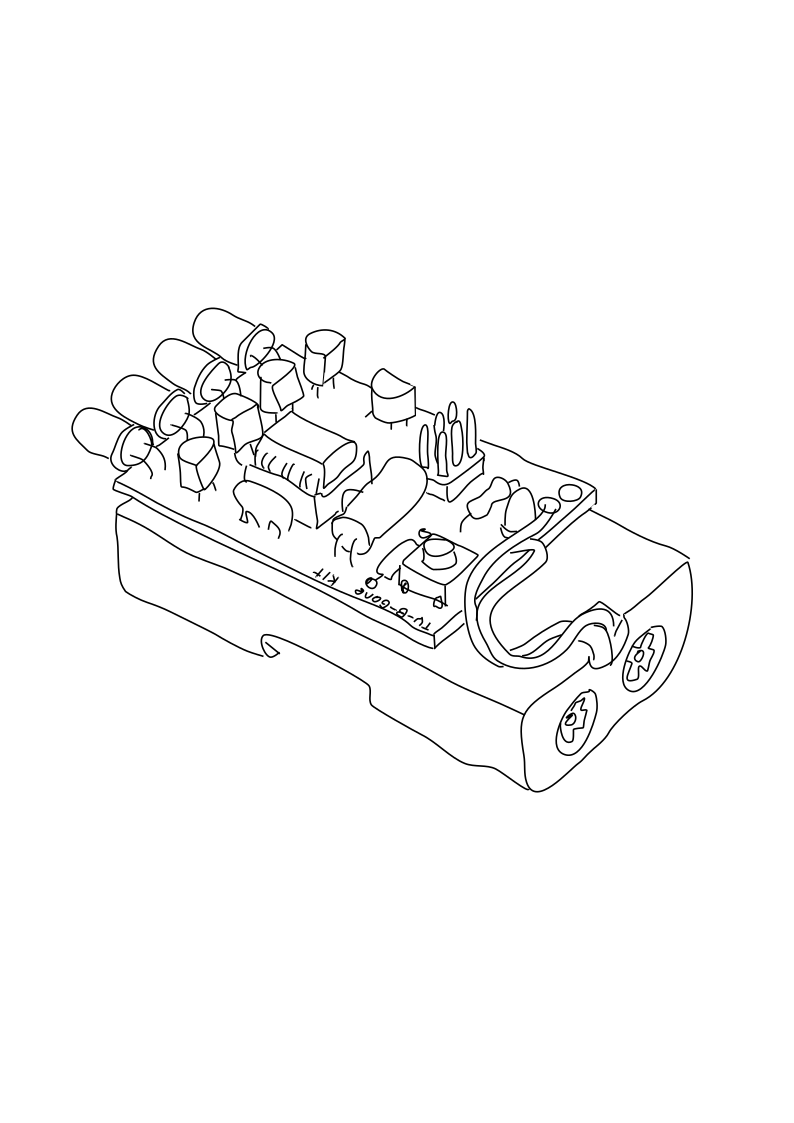
TV-B-Gone
The TV-B-Gone is an open-source device that can turn off any television set. It was created by Mitch Altman and is based on the ATtiny85 microcontroller. The device uses a simple infrared transmitter to send signals that are recognized by most television sets, effectively turning them off.
| License |
CC-BY-SA |
| Creator |
Mitch Altman |
| Website |
https://learn.adafruit.com/tv-b-gone-kit |
Your Own Project:
______________________
This zine is clearly missing one more OSHW project: yours! So tell us a bit about it, and draw it on the right side. Afterwards, feel free to take a picture and send it to us at hello@makervan.de. Or share it on social media to get the word out about it.
_____________________________________________
_____________________________________________
_____________________________________________
_____________________________________________
_____________________________________________
| License |
______________________ |
| Creator |
______________________ |
| Website |
______________________ |
OSHW Coloring Zine
by Severin Schols of MakerVan Labs
First edition, 2026
Licensed under CC-BY-SA 4.0


Made using open source tools:
Inkpad, Inkscape & weasyprint
Share your drawings on social media,
using the hastag #oshwcoloringzine
makervan.de